 Urgala
Ginger
Botanical Properties & Traditional Uses
Exploring ginger root's role in traditional medicine systems and modern scientific investigation of its active compounds.
Ginger in Traditional Medicine
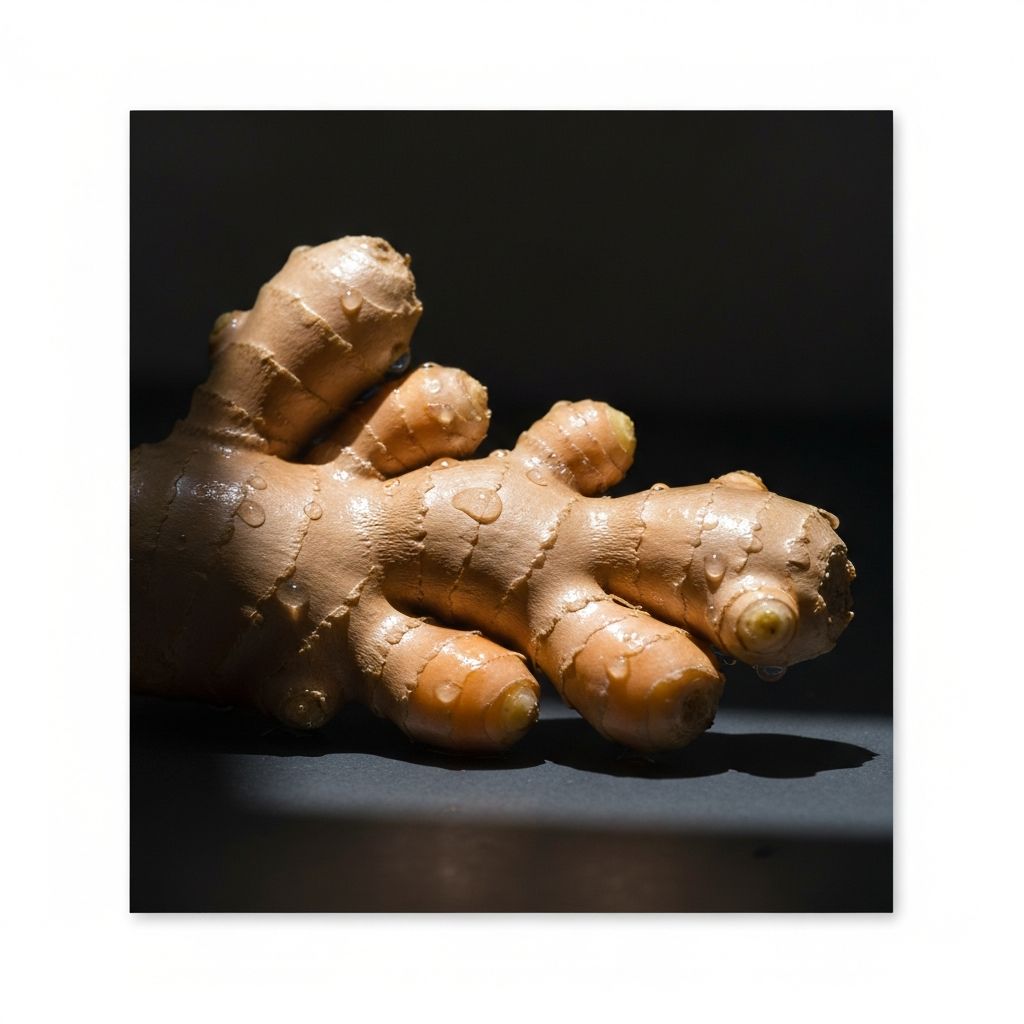
Ginger has been documented in traditional medicine systems across Asia, Africa, and the Middle East for thousands of years. It has been valued for its warming properties and digestive support in traditional preparations.
In Ayurvedic medicine, ginger is considered a "universal medicine" and is used in various formulations. Traditional Chinese Medicine similarly recognizes ginger's role in supporting wellness.
Active Compounds in Ginger
Gingerols & Shogaols
Ginger's primary active compounds are gingerols, which comprise approximately 1-3% of fresh ginger weight. When ginger is dried, gingerols are converted to shogaols, which have different biochemical properties.
Chemical Composition
Scientific analysis reveals that ginger contains over 400 different chemical compounds, including volatile oils, amino acids, and various phytonutrients. This complex composition contributes to ginger's multifaceted properties.
Research Focus
Scientists primarily focus on gingerols and shogaols due to their concentration and bioactivity. Laboratory and clinical research investigates how these compounds interact with the body's systems.
Scientific Investigation
Digestive Support
Traditional uses of ginger for digestive comfort are being investigated by researchers examining how gingerols may support gastrointestinal function and comfort.
Anti-Inflammatory Properties
Scientific studies examine ginger's potential to support the body's natural inflammatory response through mechanisms involving its active compounds.
Thermal Effects
Ginger's warming sensation is associated with piperine-like compounds. Research explores the sensory and physiological mechanisms behind this characteristic warming property.
Fresh vs. Dried Ginger
Fresh ginger contains higher concentrations of gingerols, while dried ginger has more shogaols due to the heat-induced conversion during drying. This chemical difference means they may have subtly different properties.
Traditional practices utilize both forms, often selecting based on the desired outcome. Modern research compares the effects of fresh and dried preparations to understand these differences.
Continue Reading
Educational Information
This article provides educational content about ginger and its traditional and scientific context. It is not medical advice. Individual responses to ginger vary, and some people may experience sensitivity. Consult a healthcare provider before using ginger if you are pregnant, taking medications, or have specific health conditions.
Not a medicinal product. Consult a doctor before use.